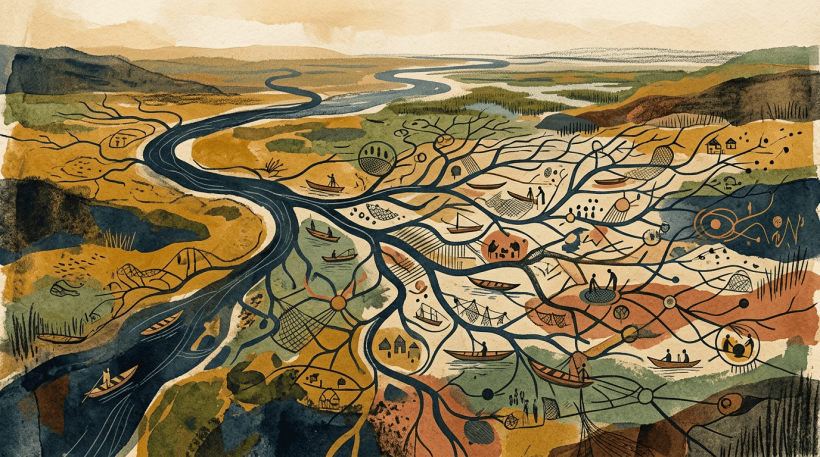
When the salmon disappear, who works together?

When people face difficult decisions about a shared resource, they also need ways to exchange knowledge, work across community boundaries, and have a meaningful voice in management.

For generations, the Tana River has been more than a place to catch salmon. Along the Norway–Finland border, fishing is tied to Saami cultural heritage, local livelihoods, and community relationships. But salmon catches have fallen sharply, and Atlantic salmon fishing has been banned since 2021. Our new study in Ecology and Society asks a question that matters for the river’s future: How connected are the fishers who depend on it?

We interviewed 42 fishers on the Norwegian side of the river and asked them to map whom they turn to for information about fishing, practical help, and discussions about river management. We also played an allocation game where we invited participants to decide whether to keep or share the value of 15 kilograms of salmon with other fishers.

Social connections depended on the relationships we examined. Fishers described mutual exchanges of information and help. Sharing in the allocation exercise was less connected: of the 33 participants included in that part of the study, 15 kept the full amount, while eight gave it all away. Across the different social networks, fishers tended to name different people for different purposes.

Geography mattered, too. Few connections crossed the boundary between the upstream Karasjok and downstream Tana communities. Tana River Management was an important source of management information for many participants, but a central organisation alone cannot connect every part of a river community.

This does not mean fishers are unwilling to cooperate, or that weak social networks caused the salmon decline. The study captures only a small part of a large river system, and the winnings from the allocation game was paid in money rather than actual salmon—a distinction some participants said affected their choices. The findings suggest that restoring a fishery involves more than setting catch limits. When people face difficult decisions about a shared resource, they also need ways to exchange knowledge, work across community boundaries, and have a meaningful voice in management. Strengthening those connections could be one important part of restoring the Tana River and its salmon population.
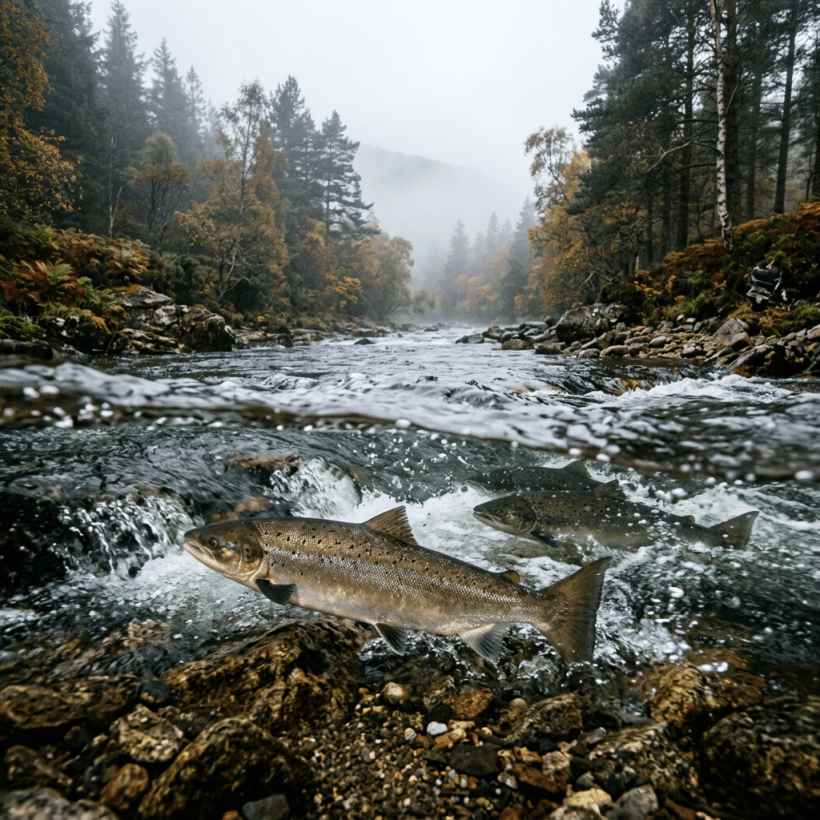
Sharing the Salmon: Why Tana River Fishers Talk Cooperation but Play It Safe

The paper “Perceptions of common-pool resource management in the Tana River, Norway” explores local residents’ views on managing wild Atlantic salmon. It reveals a gap between ideal norms of catch redistribution and actual contributions, emphasizing the importance of monitoring and co-management. Additionally, local context influences trust and expectations regarding resource sharing.

Sustainably managing wild Atlantic salmon in the Tana River is a classic common-pool resource dilemma: individual fishers’ short-term interests can conflict with the long-term health of the shared stock.

Our newest paper, “Perceptions of common-pool resource management in the Tana River, Norway: An exploratory analysis“, investigates how local residents perceive and approach this challenge.

Using short hypothetical scenarios (“vignettes”) about rivers with either declining or sustainable salmon stocks, participants were asked:

  • How much of the total catch should ideally be redistributed among fishers
  • How much they believe people would actually contribute
  • What they see as necessary conditions for successful shared resource management

An allocation game was also used to observe real cooperation behavior.

Key findings:

  • Norms vs. behavior: Participants think 35–50% of the catch should be redistributed, yet they expect actual contributions to be only 15–30%. In the allocation game, the most common choice was to give away 0% of one’s stake, revealing a large gap between cooperative ideals and actual behavior.
  • Local differences: When asked about the consequences of introducing a common storage facility, respondents from Karasjok expressed a more pessimistic outlook than those from Tana, suggesting important place-based differences in trust and expectations.
  • Shared foundations for cooperation: Across both municipalities, there was strong agreement that monitoring, shared traditions, and co-management are crucial for successful common-pool resource management.
  • Conflict hotspots: Almost all participants reported disagreements over river use, with tourism and specific fishing gear emerging as central points of contention.

Contribution

The study highlights a pronounced discrepancy between stated norms of fairness and observed cooperative behavior, as well as how local context shapes expectations about collective management. These insights are vital for designing co-management institutions and policies that align with local perceptions and address conflict over shared salmon resources in the Tana River.