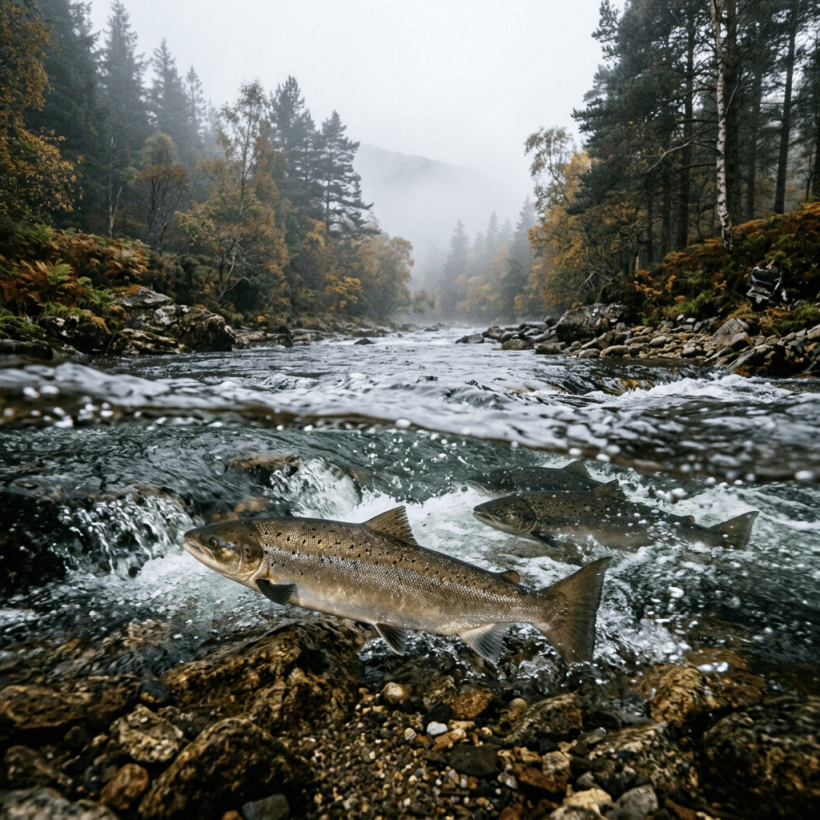
Sustainably managing wild Atlantic salmon in the Tana River is a classic common-pool resource dilemma: individual fishers’ short-term interests can conflict with the long-term health of the shared stock.
Our newest paper, “Perceptions of common-pool resource management in the Tana River, Norway: An exploratory analysis“, investigates how local residents perceive and approach this challenge.
Using short hypothetical scenarios (“vignettes”) about rivers with either declining or sustainable salmon stocks, participants were asked:
- How much of the total catch should ideally be redistributed among fishers
- How much they believe people would actually contribute
- What they see as necessary conditions for successful shared resource management
An allocation game was also used to observe real cooperation behavior.
Key findings:
- Norms vs. behavior: Participants think 35–50% of the catch should be redistributed, yet they expect actual contributions to be only 15–30%. In the allocation game, the most common choice was to give away 0% of one’s stake, revealing a large gap between cooperative ideals and actual behavior.
- Local differences: When asked about the consequences of introducing a common storage facility, respondents from Karasjok expressed a more pessimistic outlook than those from Tana, suggesting important place-based differences in trust and expectations.
- Shared foundations for cooperation: Across both municipalities, there was strong agreement that monitoring, shared traditions, and co-management are crucial for successful common-pool resource management.
- Conflict hotspots: Almost all participants reported disagreements over river use, with tourism and specific fishing gear emerging as central points of contention.
Contribution
The study highlights a pronounced discrepancy between stated norms of fairness and observed cooperative behavior, as well as how local context shapes expectations about collective management. These insights are vital for designing co-management institutions and policies that align with local perceptions and address conflict over shared salmon resources in the Tana River.

