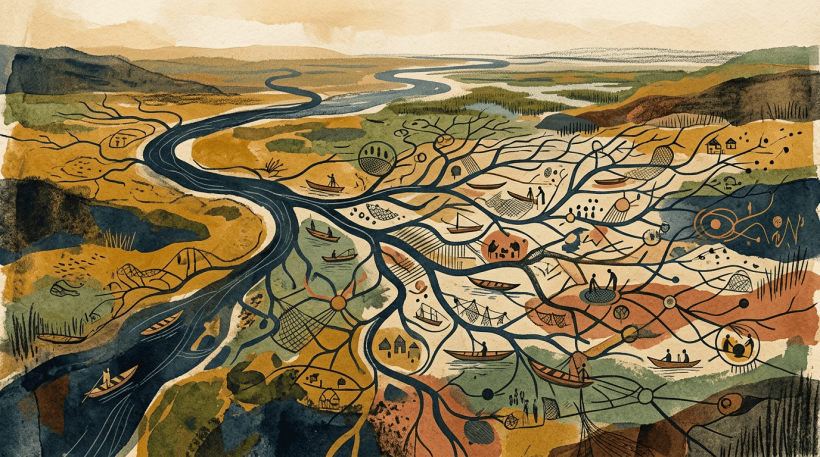
For generations, the Tana River has been more than a place to catch salmon. Along the Norway–Finland border, fishing is tied to Saami cultural heritage, local livelihoods, and community relationships. But salmon catches have fallen sharply, and Atlantic salmon fishing has been banned since 2021. Our new study in Ecology and Society asks a question that matters for the river’s future: How connected are the fishers who depend on it?
We interviewed 42 fishers on the Norwegian side of the river and asked them to map whom they turn to for information about fishing, practical help, and discussions about river management. We also played an allocation game where we invited participants to decide whether to keep or share the value of 15 kilograms of salmon with other fishers.
Social connections depended on the relationships we examined. Fishers described mutual exchanges of information and help. Sharing in the allocation exercise was less connected: of the 33 participants included in that part of the study, 15 kept the full amount, while eight gave it all away. Across the different social networks, fishers tended to name different people for different purposes.
Geography mattered, too. Few connections crossed the boundary between the upstream Karasjok and downstream Tana communities. Tana River Management was an important source of management information for many participants, but a central organisation alone cannot connect every part of a river community.
This does not mean fishers are unwilling to cooperate, or that weak social networks caused the salmon decline. The study captures only a small part of a large river system, and the winnings from the allocation game was paid in money rather than actual salmon—a distinction some participants said affected their choices. The findings suggest that restoring a fishery involves more than setting catch limits. When people face difficult decisions about a shared resource, they also need ways to exchange knowledge, work across community boundaries, and have a meaningful voice in management. Strengthening those connections could be one important part of restoring the Tana River and its salmon population.

