Exploring Cooperation and Herders’ Lives in Mongolia: A Fieldwork Journey

Guro and Wurihan launched fieldwork for COMPLEXITY, focusing on Mongolian herders. Guro maps social networks and uses experimental games to study cooperation, while Wurihan examines animal health and cooperation in handling disease outbreaks. They are now heading to Övörkhangai Province for interviews.

July 1st this year fieldwork was officially launched for COMPLEXITY.

Guro, a PhD-student on the project, and Wurihan, a postdoc on the project started their journey towards Mongolia and their research among herders.

Thy started their journey from the capital Ulaanbaatar where they met up with local connections and networks.

The focus of their projects are somewhat different, yet interlinked through the lens of cooperation.

Guro’s research will include mapping social networks and experimental games. Experimental games are a widespread research method to investigate human behavior, such as cooperation.

By combining these approaches, Guro will be able to examine the importance of kinship, reciprocity, network position and social environment for those the herders choose to cooperate with.

Wurihan, is more focused on using participant observation to explore the role of animal health and how cooperation affects handling of the outbreak of animal diseases.

After a couple of days in Ulaanbaatar, they set their course towards herding communities.

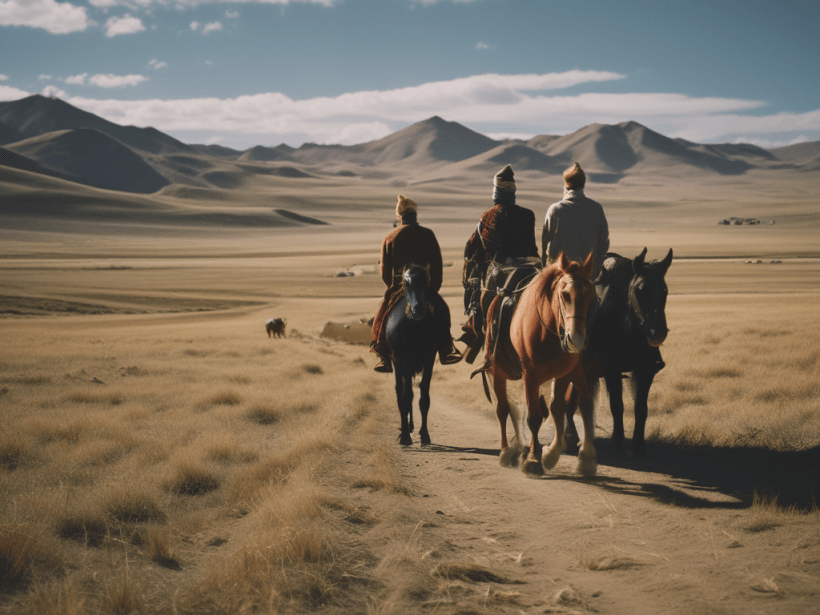
Guro and Wurihan on their way to interview Mongolian herders.
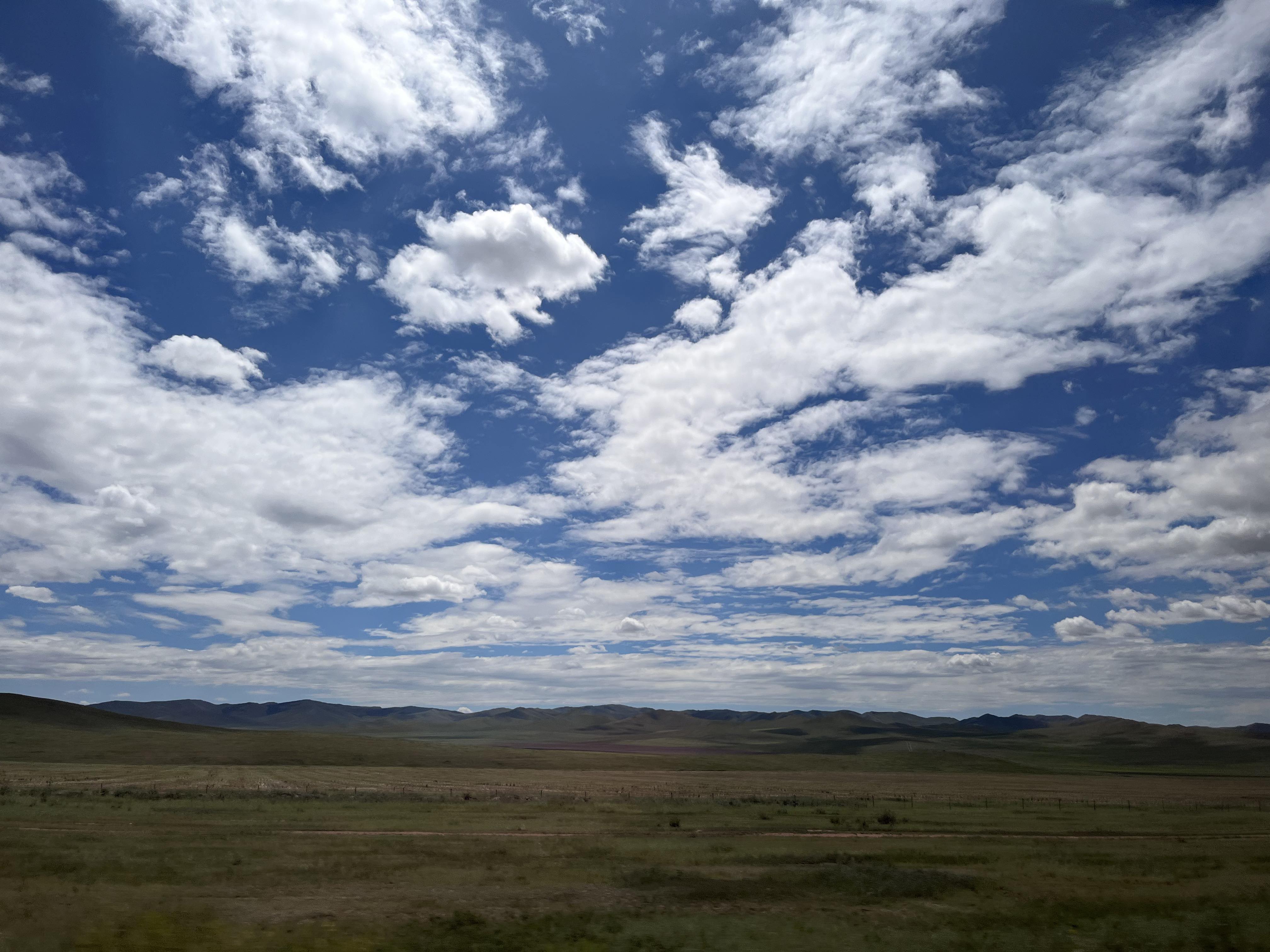
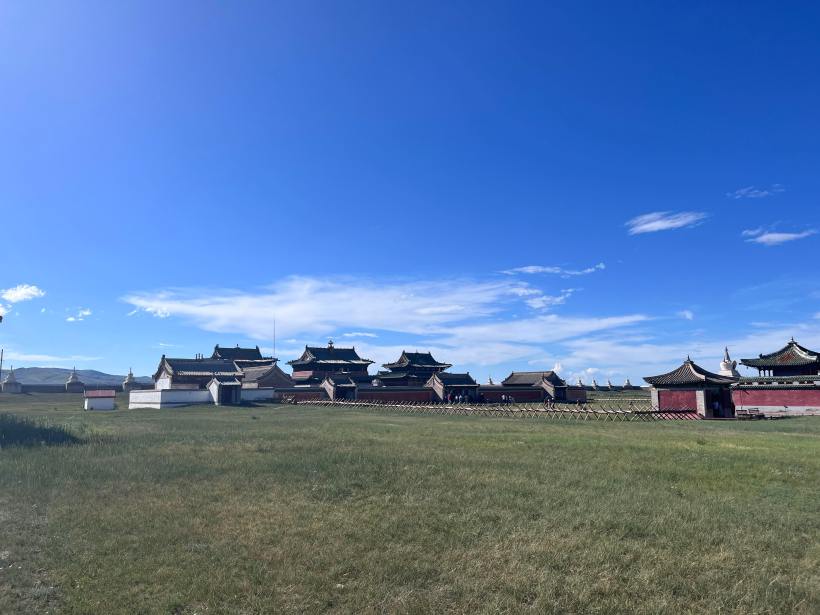
Steppe landsacpe. Photo: Guro and Wurihan (C).

They are travelling to Övörkhangai Province, which among other things have the location of the ancient city of Karakorum.

On their way, they also stopped by the Erdene Zuu Monastery, which is the oldest surviving Buddhist monastery in Mongolia.

Construction of this monastery started in 1585 after a meeting with the 3rd Dalai Lama and the declaration of Tibetan Buddhism as the state religion of Mongolia.

Some pictures below, all taken by Guro and Wurihan (C).
Stay tuned for more updates!
Wealth of nomads – an exploratory analysis of livestock inequality in the Saami reindeer husbandry

Is livestock is an unstable form of wealth limiting social differentiation? This study demonstrates that pastoral wealth follows the same pattern as that of all forms of wealth. Wealth accumulates over time, and while the highest earners can save much of their income (i.e., newborn livestock), low earners cannot. Thus, high earners can accumulate more wealth over time.

Just got a paper published in Humanities & Social Sciences Communications.

The paper is open accessed and can be found here.

Using governmental statistics from 2001 to 2018 on reindeer herding in Norway, this paper investigates long term wealth differentials in the reindeer husbandry in Norway.

Noteworthy, the data do not represent a sample of reindeer herders but encompass the entire population of licensed reindeer herders in Norway

The paper argues against a dominant view that livestock, as the primary source of wealth, limits the development of inequalities, making pastoralism unable to support complex or hierarchical organisations (see also this page).

Main results

  • From 2001 to 2018, livestock inequality, measured by the Gini coefficient, decreased nationally and regionally.
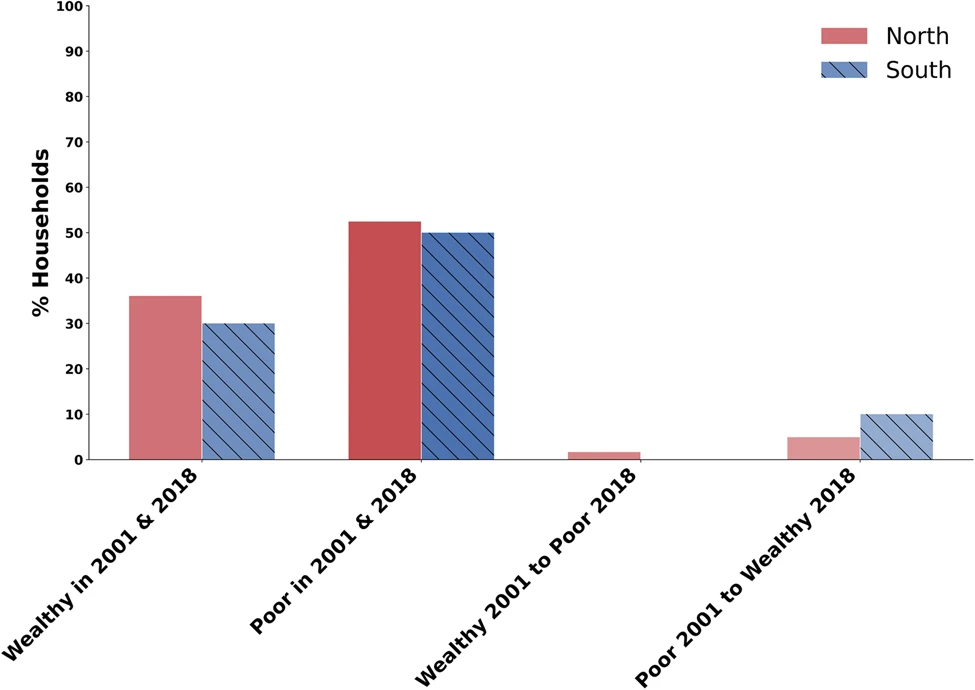
  • Cumulative wealth distribution follows a similar pattern: the proportion owned by the wealthy decreased from 2001 to 2018, whereas the proportion owned by the poor increased.
  • Rank differences persist with minor changes, especially among the poor; around 50% of households ranked as poor in 2001 continued to be so in 2018.
  • Being wealthy or poor differed between regions. For example, households classified as poor in the South had, on average, larger herds than those in the North. Furthermore, compared to the South, wealthy households in the North had, on average, substantially more reindeer while at the same time experiencing much more variation in reindeer numbers

In sum, there is nothing apparent in pastoral adaptation, with livestock as the main base of wealth that levels wealth inequalities and limits social differentiation.

You can read the full paper here.

Annoyingly, the journal cropped one of the figures in the pdf version of the paper so that relevant information is missing. So, Fig.7 should be viewed online until this is corrected (https://www.nature.com/articles/s41599-023-02316-3/figures/7).

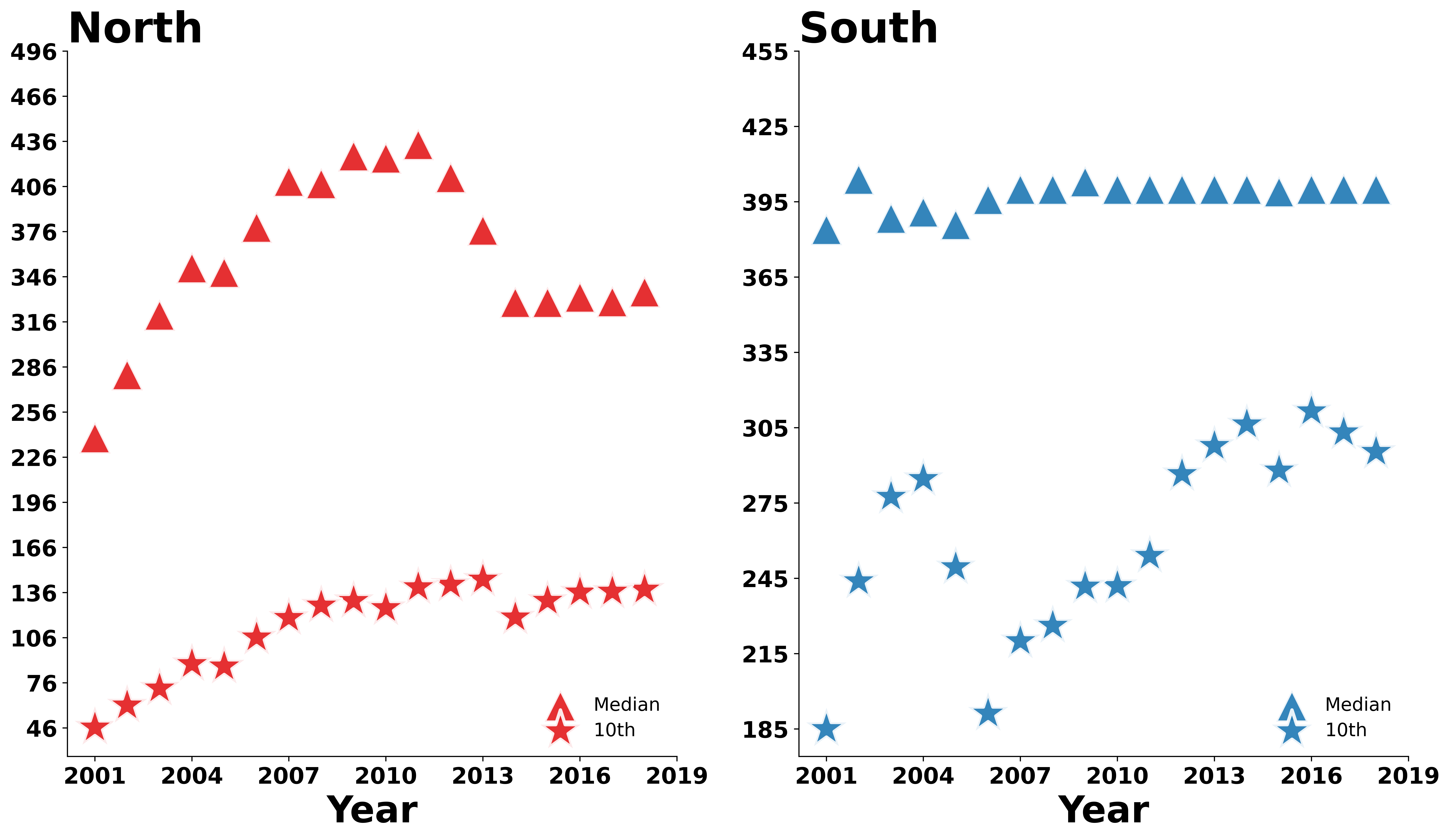
But, while we looked at the wealthy and poor, another way to look at wealth differentials is to look at how the poor are doing relative to the middle class, i.e. the 50/10 ratio.

In effect, we can compare the median reindeer number (the number of reindeer a herder right in the middle of the distribution has) with the tenth-percentile reindeer number (the number of reindeer someone near the bottom of the income distribution has).

If the 50/10 ratio shrinks it means that poorer households are catching up with the ‘middle-class’.

While not addressed in the paper, here is a figure showing that the poor are catching up to the middle-class, especially in recent years.

Temporal trends in median and 10th percentile reindeer numbers for both regions. See the full paper here.

Predatory or prey – the rise of nomadic empires

In 1227 Genghis Khan died leaving behind a legacy of conquest and the largest land empire in history, only fully realized by his Grandson Kubhlai Khan with the establishment of the Yuan Dynasty in 1267 (Chaliand 2004). Continue reading “Predatory or prey – the rise of nomadic empires”