Exploring Cooperation and Herders’ Lives in Mongolia: A Fieldwork Journey

Guro and Wurihan launched fieldwork for COMPLEXITY, focusing on Mongolian herders. Guro maps social networks and uses experimental games to study cooperation, while Wurihan examines animal health and cooperation in handling disease outbreaks. They are now heading to Övörkhangai Province for interviews.

July 1st this year fieldwork was officially launched for COMPLEXITY.

Guro, a PhD-student on the project, and Wurihan, a postdoc on the project started their journey towards Mongolia and their research among herders.

Thy started their journey from the capital Ulaanbaatar where they met up with local connections and networks.

The focus of their projects are somewhat different, yet interlinked through the lens of cooperation.

Guro’s research will include mapping social networks and experimental games. Experimental games are a widespread research method to investigate human behavior, such as cooperation.

By combining these approaches, Guro will be able to examine the importance of kinship, reciprocity, network position and social environment for those the herders choose to cooperate with.

Wurihan, is more focused on using participant observation to explore the role of animal health and how cooperation affects handling of the outbreak of animal diseases.

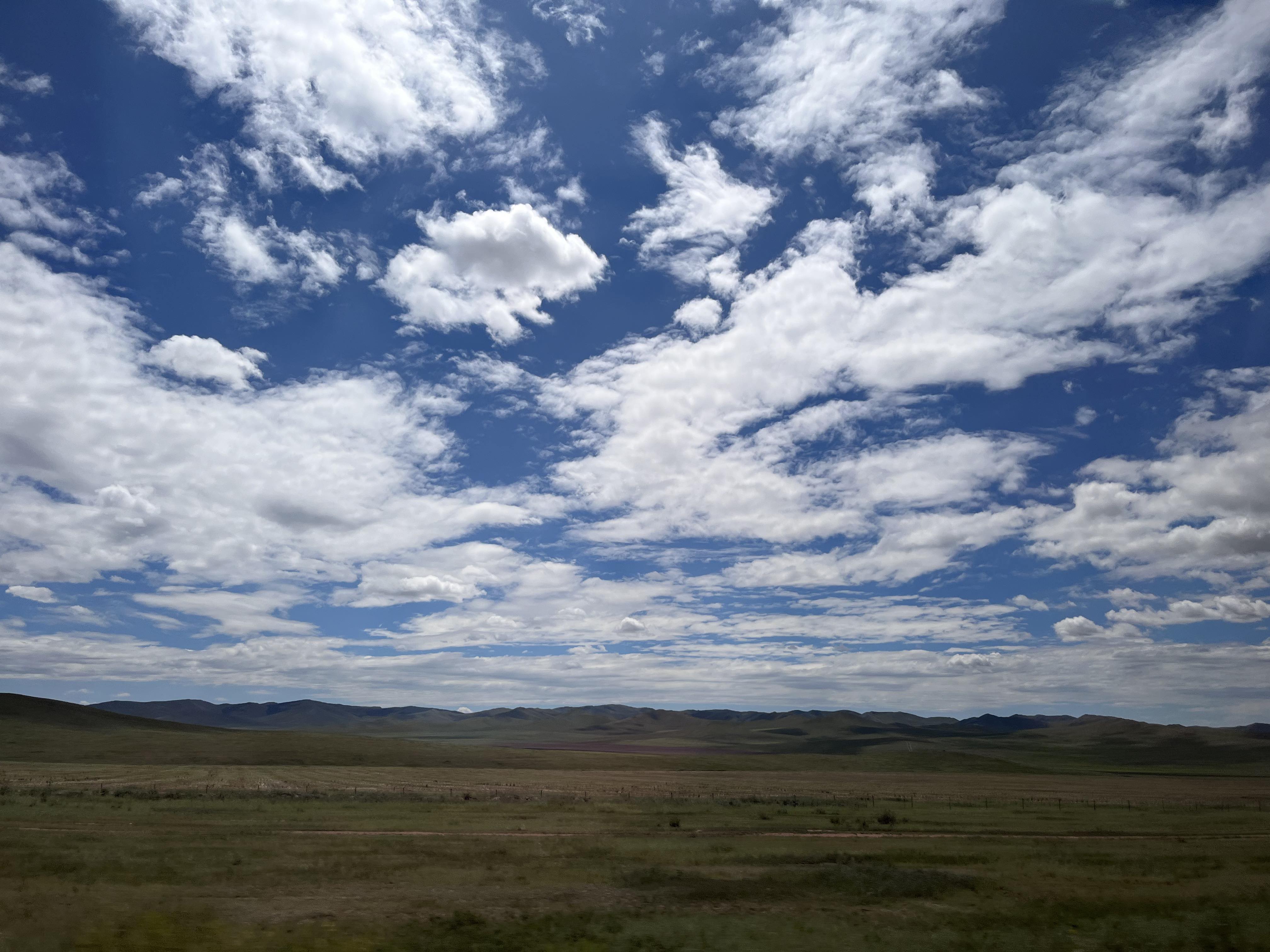
After a couple of days in Ulaanbaatar, they set their course towards herding communities.

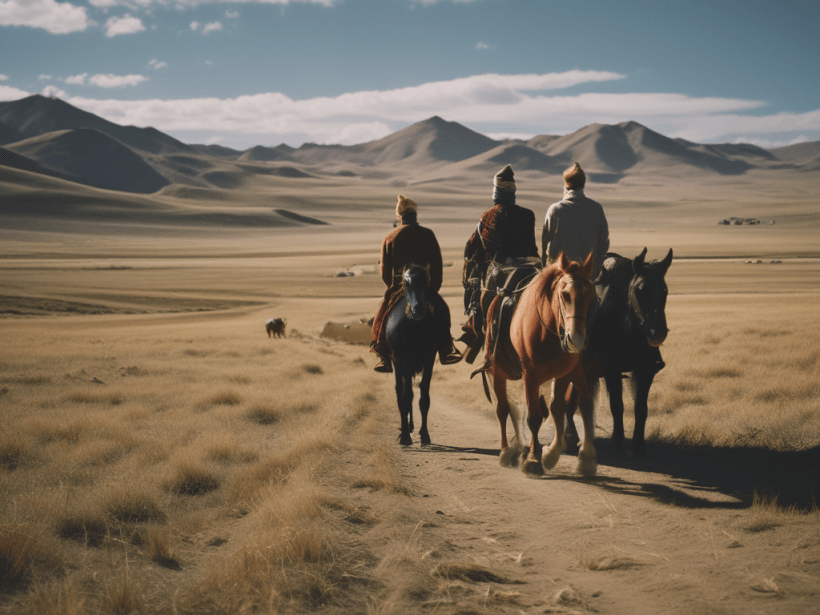
Guro and Wurihan on their way to interview Mongolian herders.
Steppe landsacpe. Photo: Guro and Wurihan (C).

They are travelling to Övörkhangai Province, which among other things have the location of the ancient city of Karakorum.

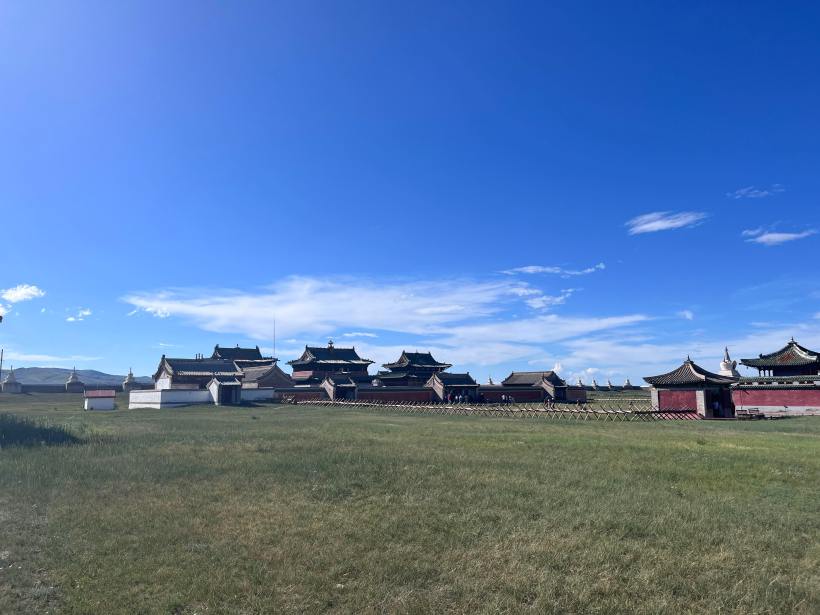
On their way, they also stopped by the Erdene Zuu Monastery, which is the oldest surviving Buddhist monastery in Mongolia.

Construction of this monastery started in 1585 after a meeting with the 3rd Dalai Lama and the declaration of Tibetan Buddhism as the state religion of Mongolia.

Some pictures below, all taken by Guro and Wurihan (C).
Stay tuned for more updates!

Collaborative foundations of herding: The formation of cooperative groups among Tibetan pastoralists

Just got a paper published in Journal of Arid Environments on cooperation among Tibetan pastoralists.

You can read the paper here, it’s open access.

Luckily, the paper got published on the same day as I got grant applications rejected from the Research Council of Norway.

Why bring that up? Because the paper and one of the grant applications have some obvious parallels.

The paper documents why cooperation is vital for Tibetan pastoralists: it increases control of herds, reduces individual household’s labour demand and increases the potential for economic diversification.

Tibetan herder bring a subset of the herd back to camp for the night. Photo (C) Marius Warg Næss

The grant application extends this aspect: it wants to comparatively investigate pastoral cooperation by taking as its starting point that cooperative herding groups are a necessary component of pastoral life.

The paradox is that while it is almost impossible for pastoral households to maintain production without cooperative labour investment and mutual help from other households, a comparative perspective of cooperative herding group formation is currently lacking.

Moreover, while cooperation is widely documented, it is treated in a somewhat ad hoc fashion. For example, it has been used as an explanation for why there is no relationship between household labour investment and pastoral production (see this paper).

Furthermore, herding groups have been described as fluid: changing composition from year to year and between seasons. Thus, they have been viewed as less important than more extensive and more political, groupings.

My personal point of view that despite the instability of herding units, they represent an essential building block of nomadic societies because they are concerned with daily cooperation.

More to the point, we know relatively little about them: what evidence we have represent a snapshot in time. We lack longitudinal data as well as data concerning how cooperation is changing as a consequence of changes in land tenure.

While getting grant rejections sucks, I still think this is a worthwhile project that I’ll pursue.

Anyone interested in collaborating on such a project is welcome to contact me.