Mongolia
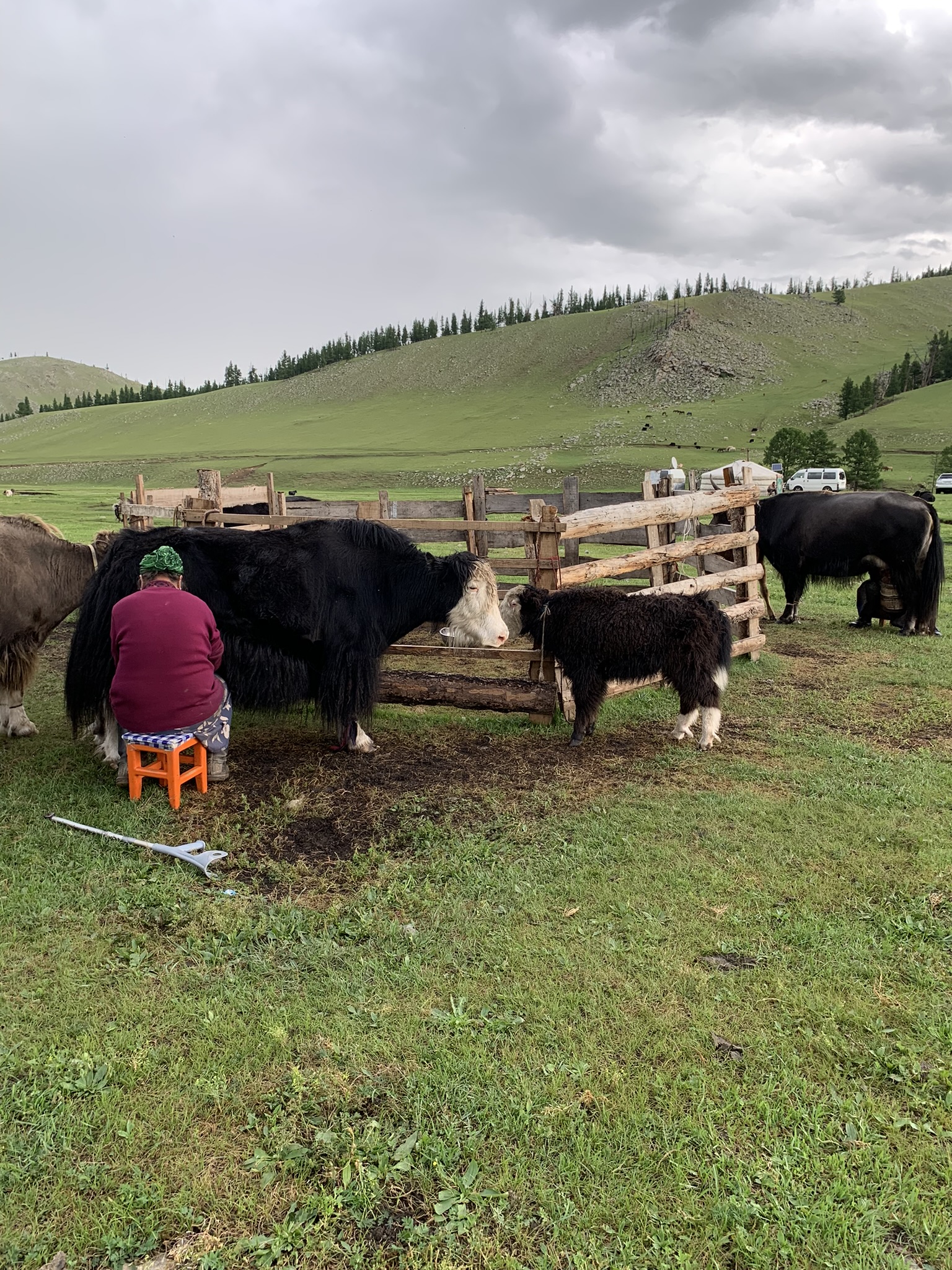
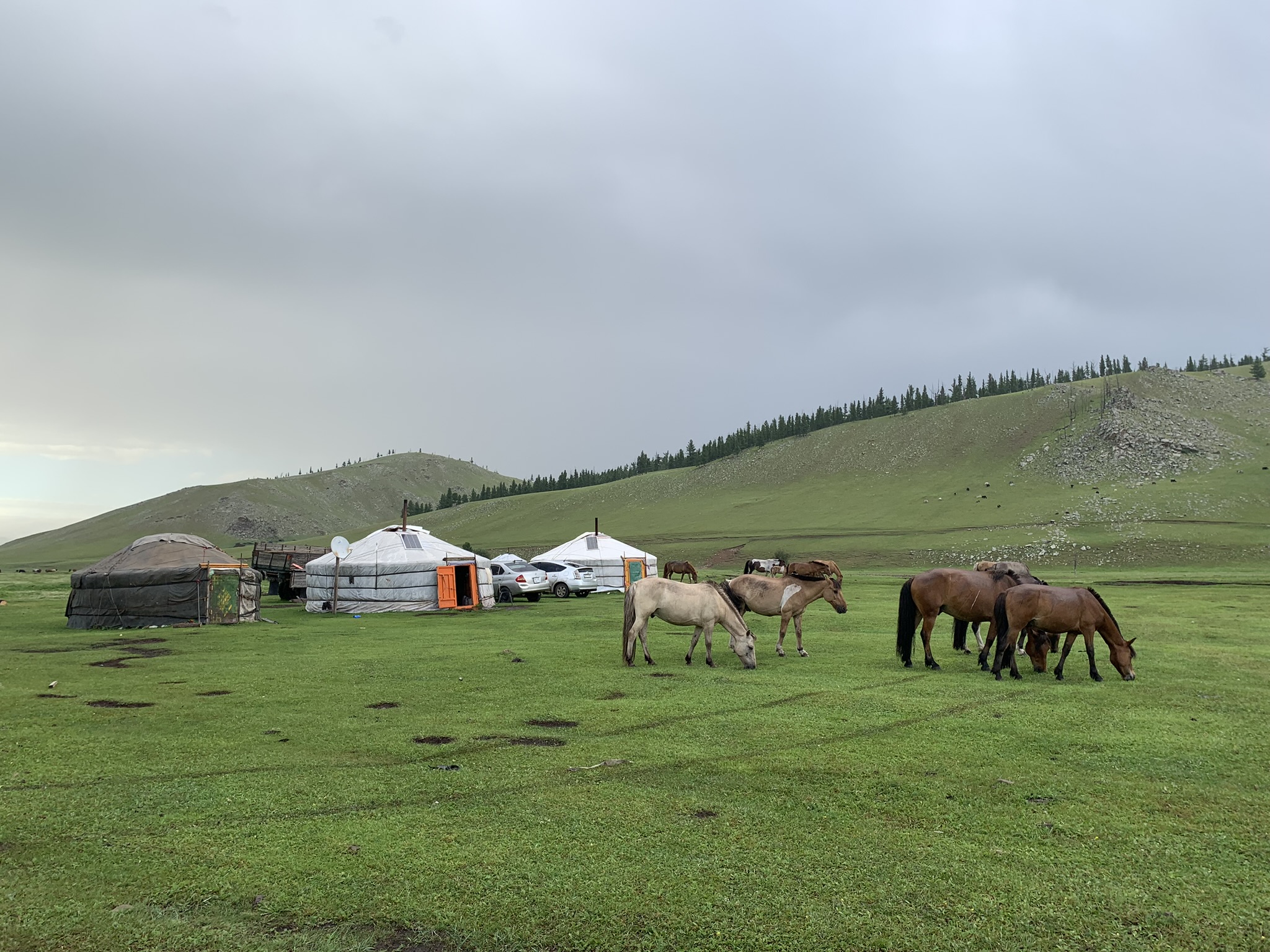

Bat-Ulzii is a district (soum) with around 7500 inhabitants and 1530 herding households. The district is located northwest in the Övörkhangai province in the Khangai region of Central Mongolia. Bat-Ulzii is divided into six bags.
During the summer of 2024 Guro did her fieldwork in the 5th bag, which contains 177 households with livestock and around 45 actively herding. The area’s ecology is relatively affluent, with green grass plains and mountain valleys with pine forests. The herders in this area mostly have a combination of horses, sheep, goats, yak and Mongolian cattle. Most herders in the 5th bag live relatively close to the soum centre during summer while moving further up in the mountains during winter. In the wintertime, several households stay close in the same winter camp to share the work related to herding. These herding groups are known as Khot-ails.
Guro investigates how different evolutionary mechanisms can explain cooperation between herders, and how cooperation influences performance. In addition, sheis interested in how cooperation, and its benefits, influence men and women differently.
In the summer of 2024, Wurihan (Urhan) completed the first phase of her fieldwork. During this period, she built strong connections with veterinarians and their families in Bat-Ulzii soum, Uvurkhangai province, Mongolia, who became key collaborators in her study. She participated in their daily lives and work and occasionally served as an assistant while conducting ethnographic observations. Additionally, she visited six soums in two eastern provinces of Mongolia, where she conducted semi-structured interviews with local officials to gather comparative research material. Future fieldwork will build upon these foundations to further explore the lives and practices of Mongolian herders and their life-world.
Her research examines Mongolia’s pastoralist world, investigating the ways in which various actors within the herd herder community coexist and cooperate. This research pays particular attention to mobility—not only the seasonal movements inherent to pastoralism but also other forms of mobility, such as those related to disease, finance, policy, and market dynamics.
Rwanda

Vedaste’s project consists of investigating land use reforms and traditional pastoralism in Rwanda. The project started in June 2024 and he is currently doing fieldwork in Nyabihu, Rusizi, Kayonza, and Nyagatare districts. The study is in Rwanda due to its strategic location in the middle of East Africa, i.e., Tanzania, Kenya, Burundi, DR Congo and Uganda, with which it shares pastoral and cultural patterns. Thus, the choice of such districts relied upon the fact that they are ones touching on these countries and in which pastoralism has mainly been practised. He uses interviews, experimental games, and focus group discussions as the main methodological approaches.
 Pastoralism, Climate Change and Policy